Cats / Essentials / Travel
Cat carriers: the setup matters as much as the bag
Research-based editorial. We do not claim hands-on testing or veterinary review. Our method
The useful question is not which carrier looks best. It is which one lets you move your cat securely and clean it without a struggle. This guide compares design features; we have not tested individual carriers.
What to look for
- A firm base that stays level when lifted.
- Closures you can check visually before leaving.
- Top access or a removable top, so handling does not depend on pulling a cat through a small doorway.
- Ventilation that remains open when bedding is added.
- A washable liner and surfaces accessible for cleaning.
Which style fits your routine?
| Style | Reason to choose it | Tradeoff |
|---|---|---|
| Rigid, removable top | Access and surface cleaning | Bulkier to store |
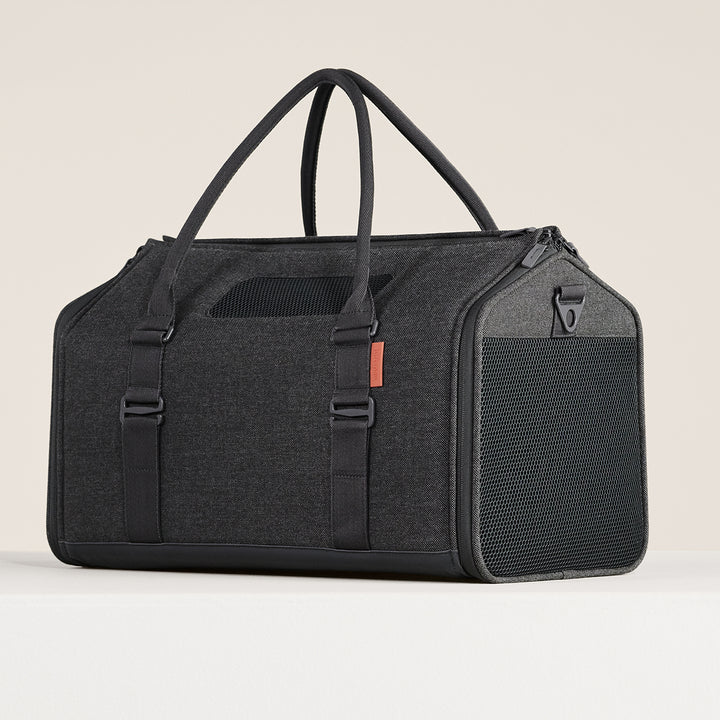
| Soft, top opening | Lighter carrying and flexible storage | Fabric cleaning and base stability vary |
A practical buying path
Start with the carrier sizing guide, then compare the Away and Tuft & Paw specifications. Neither is a universal fit. If airline travel is not part of your plans, you may value removable-top access more than compressibility.
Make it familiar
Leave the carrier available at home with familiar bedding, reward voluntary investigation, and build up slowly. Keep doors and windows closed when checking the fit. Covering part of the carrier may help some cats, but never block ventilation or allow overheating.
When to ask for help
If your cat becomes distressed or cannot be handled safely, ask your veterinarian for a plan before travel. This guide does not recommend sedatives, medication doses or treatment.
General information, not individualized veterinary advice. For symptoms, treatment or medical travel needs, contact your veterinarian. Confirm fit, current terms and policies before buying or booking. Read our pet advice boundaries